
Stockholm neighborhood map
These two maps answer different questions. The neighbourhood map groups the city into the areas visitors actually talk about, such as Gamla Stan, Södermalm or Östermalm, and is handy for choosing where to stay. The district map shows the official boundaries of the municipality, including the outer suburbs reached by metro.
Each part of central Stockholm has a distinct feel. Gamla Stan is the medieval core with the Royal Palace and narrow lanes; Norrmalm is the commercial centre around Central Station and Sergels torg; Östermalm has grand avenues, embassies and the Saluhall food market; Vasastan and Kungsholmen are residential areas with plenty of cafés; and Södermalm, the large southern island, is known for its viewpoints, vintage shops and nightlife.
Beyond the inner city, the municipality extends south (Söderort) and west (Västerort) along the metro lines. It is administered through 13 district councils, while neighbouring towns such as Solna, Sundbyberg, Lidingö and Nacka are separate municipalities.
Stockholm neighborhoods map
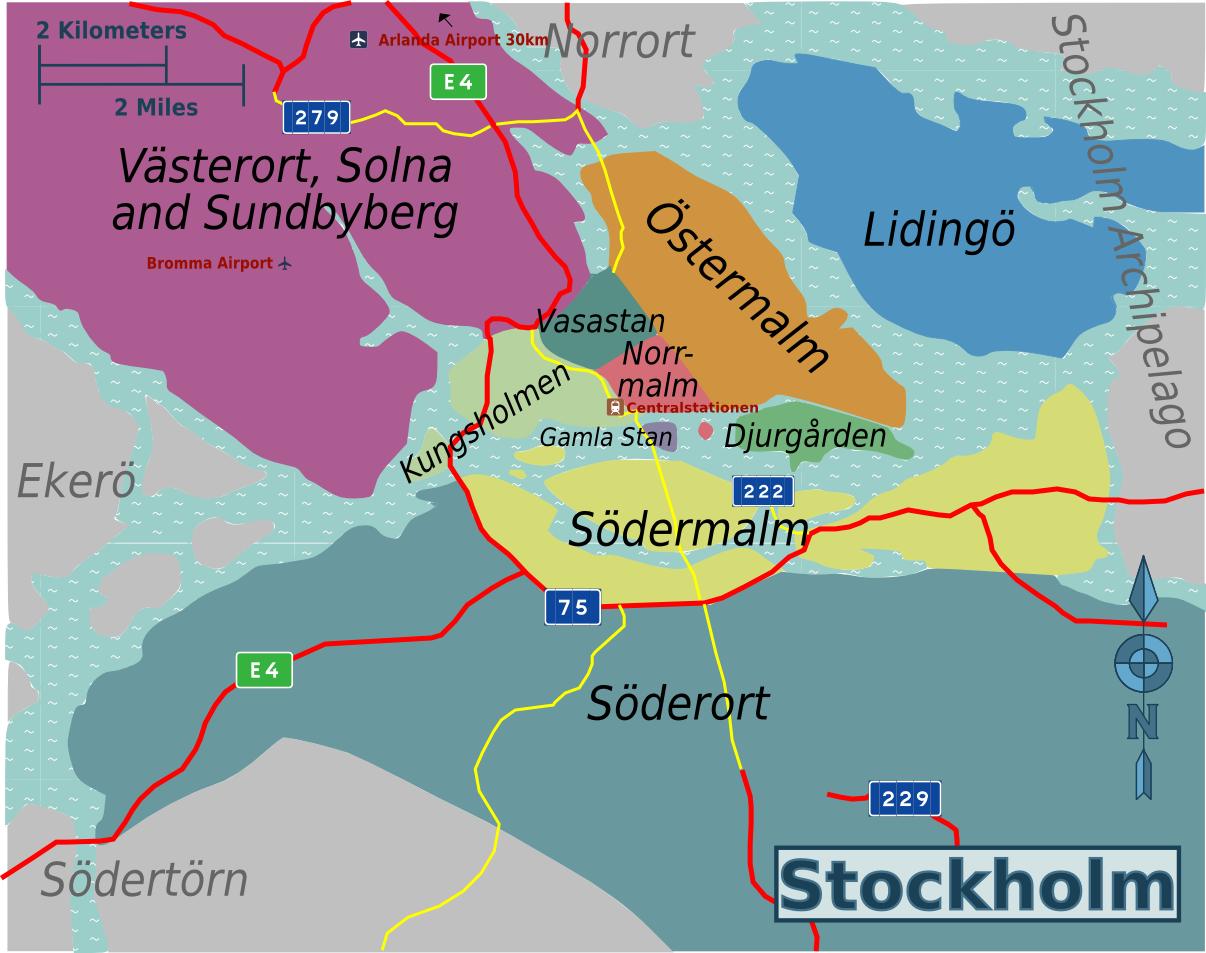
Map of Stockholm neighborhoods
A simple colour-coded map of the areas visitors usually talk about: Gamla Stan, Norrmalm, Vasastan, Östermalm, Kungsholmen, Djurgården and Södermalm.
It also shows the wider suburbs (Västerort, Söderort), neighbouring Lidingö and the archipelago, as well as Bromma Airport and the direction of Arlanda. Use it to choose a base: Norrmalm for transport links, Södermalm for cafés, Östermalm for a quieter, upmarket stay.
Stockholm districts map
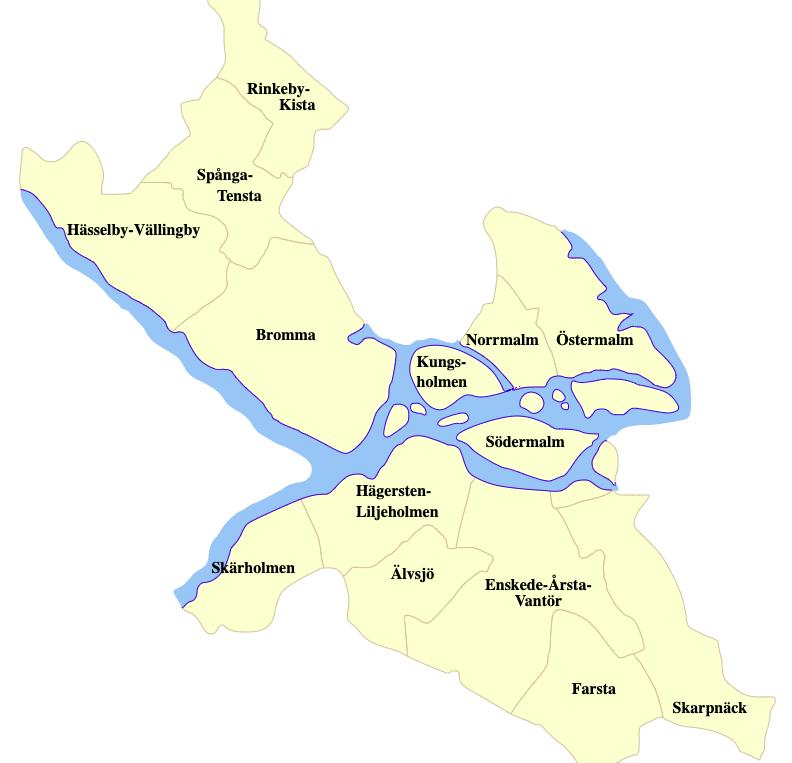
Map of Stockholm districts
The district council areas of Stockholm municipality, from Rinkeby-Kista in the north-west to Farsta and Skarpnäck in the south.
The map shows 14 areas; in 2020 Hägersten-Liljeholmen and Älvsjö were merged, and the municipality now has 13 district councils. It remains a clear guide to where suburbs such as Bromma, Vällingby or Skärholmen lie in relation to the inner city.